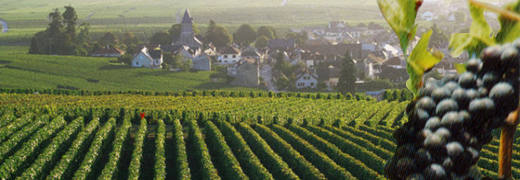
Bodega R. Lopez de Heredia, Viña Tondonia, Rioja Blanco Gran Reserva
Trevor Sharot
First published in La Revue du vin de France (Mandarin edition) January 2013
Some of you will already know everything I have to say about the wines of this bodega, and to these readers I say: please feel free to turn the page. But I suspect some of you do not, and there is no middle ground with unique wines like those from the house of Heredia! Either way, I would like to share with you the story of my discovery of this (literally) cobwebbed corner of the global wine cellar.
My story begins in a remote corner of Wiltshire, a two hour drive west from London. Situated in a tiny village is a remarkable restaurant: The Harrow at Little Bedwyn. It is run by Roger and Sue Jones - Roger is the chef and Sue the maître d’. The Guide Michelin has awarded them a star on account of the very fine cooking and service, and no doubt their extensive wine cellar has also helped. The range of Australian wines is particularly impressive, but what makes The Harrow truly remarkable is to be found tucked away in one corner of the cellar: the greatest store in Britain, and possibly anywhere outside the bodega itself, of the wines of R. Lopez de Heredia. Here, a couple of shelves and cases hold Crianza, Reserva and Gran Reserva vintages from Heredia stretching back through the decades to 1920.
Some of you may be familiar with these wines but, if not, here is a brief profile. The winery in question was founded by Rafael López de Heredia y Landeta in 1877, in Haro, Alta Rioja. Its methods were regarded as innovative then but have not changed since – there is no need – so today Heredia stands as the bastion of traditional Rioja. It has four vineyards: Tondonia, Zaco, Cubillas and Bosque, producing red, rosé and white wines. The Tinto and Rosé are both very fine wines, but it is for the whites – Viña Tondonia Blanco and especially the Blanco Gran Reserva on which we will focus – that Heredia is most famous. (You may be unaware that until the seventies more white wine was produced in La Rioja than red.)
I first encountered these wines at a dinner in London in the spring of 2012 hosted by Berry Bros & Rudd. The guest of honour was María Jose López de Heredia, the charming great grand-daughter of the founder who now runs the winery, and she had brought her best wines for us to enjoy. Between courses, María José was articulate and voluble on the history and characteristics of her wines (impressively and thankfully in English). The Blanco Gran Reserva was quite unlike any white wine I had ever tasted, simultaneously delicious yet mysterious. I had the good fortune of being seated next to her and was therefore able to ask her all my many questions.
So what is Viña Tondonia? The encépagement is 90% Viura and 10% Malvasia. It is fermented in very old 60 hl Spanish casks, their insides thick with tartrate crystals, then aged in barrel, the period varying between the Crianza, Reserva and Gran Reserva.
I discovered that Heredia is uniquely permitted to declare its own GR vintages independently of DOC Rioja, and that the most recent GR on the market at the time of writing is the 1991. This is because the GRs spend nearly ten years maturing in barrel, during which time the wine is racked twice a year. Cash flow is not king at Heredia – there are 12,900 barrels in the 135 year old cellars.
Finally the wine is drawn off, clarified with egg whites but not filtered, and bottled, the corks then being sealed with red wax. Even once bottled, the GR spends several more years in the cellars. Slumbering peacefully in the cool but damp air, the bottles all but disappear behind a curtain of cobwebs; the spiders are not just tolerated but encouraged, for they eat the moths that would otherwise attack the corks.
Eventually judged ready, the bottles are brought up, washed and labelled; the bottle is caged in a trellis of gold wire, and then wrapped in tissue paper printed with the family crest. Though beautiful to behold, the original purpose of the wax seal and cage was in fact mundane: to prevent substitution of inferior wine, a trick played on the Nazi regime at every opportunity during the second world war.
Once on the market, this wine is ready for drinking, but there is no rush! Like a good Sauternes, it keeps for decades, deepening in colour and gaining complexity. But this is not a sweet wine. On first acquaintance it is obviously dry, but to make a fuller description is not so easy; indeed, Maria-Jose advises not even to try! There is a beautiful backbone of acidity that never seems to fade, but what are the flavours that envelope it? Quince maybe, or preserved lemons, but at the same time there is a hint of salt like a Manzanilla. It taxes even Masters of Wine such as Simon Field of Berry’s, who wrote of the 1991:
‘The taster’s pen gets carried away ( probably because he finds it hard to spit the wine out during a professional tasting) and starts writing, in a somewhat inchoate fashion, a ‘sentence’ along the following lines; waxy, banana, decadent, lanolin, pear-skin, citron pressé, bitter sweet symphony, wonderful, is there any more…..…What more is there to say?’
No, there is nothing more to say; well, just one thing: taste some yourself, perhaps at The Harrow at Little Bedwyn, and discover the bodega that dances to a different beat. The Blanco should be chilled just slightly – no need to decant – and drunk either by itself, perhaps as an aperitif, or with tapas, seafood, smoked salmon, or fish or chicken in a creamy sauce – and it’s one of the few wines that complements asparagus perfectly.
The last six declared vintages were 1991, 1987, 1981, 1976, 1973 and 1970. |